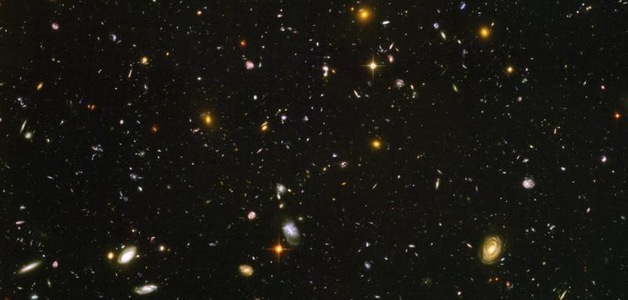
The Mysteries of Dark Matter: What Holds Our Galaxy Together?
Dark matter, an invisible and elusive substance, makes up about 27% of the universe's total mass-energy content. Despite its significant presence, it does not emit, absorb, or reflect light, making it extremely challenging to detect and study. Scientists believe that dark matter plays a crucial role in holding our galaxy together by providing the necessary gravitational pull to prevent galaxies from tearing themselves apart due to their high rotational speeds. This phenomenon is evidenced by galaxy rotation curves, which reveal that the speed of stars at the outer edges is significantly faster than can be accounted for by the visible matter alone.
The quest to understand dark matter has led to various hypotheses regarding its composition. Some researchers propose the existence of WIMPs (Weakly Interacting Massive Particles) as potential candidates, while others explore the possibility of axions or modified gravity theories. Each theory adds another layer to the mystery of dark matter and its influence on galactic dynamics. As astronomers continue to collect data from advanced telescopes and particle detectors, unraveling the secrets of dark matter may eventually illuminate how galaxies, including our own Milky Way, are structured and maintained in an ever-expanding universe.
Counter-Strike is a popular team-based first-person shooter that has become a staple in competitive gaming. Players engage in intense battles, working together to complete objectives and outsmart their opponents. For gamers looking to enhance their mobile experience, check out the Top 10 Samsung Galaxy Accessories that can improve gameplay and convenience.
Life Beyond Earth: The Search for Exoplanets in Our Galaxy
The quest to uncover life beyond Earth has captivated humanity for centuries, and the search for exoplanets in our galaxy is at the forefront of this endeavor. Exoplanets, or planets that orbit stars outside our solar system, have become the golden key in our exploration of potential extraterrestrial life. As of now, astronomers have discovered thousands of these distant worlds, thanks to advanced technology such as the Kepler Space Telescope and the Transiting Exoplanet Survey Satellite (TESS). These tools allow scientists to detect the faint dimming of stars caused by an exoplanet's transit, leading to crucial insights about their size, orbit, and distance from their respective stars.
Among the myriad of exoplanets found, some reside in the habitable zone of their stars, often referred to as the 'Goldilocks zone' where conditions may be just right for liquid water to exist—a critical ingredient for life as we know it. Notable examples include Proxima Centauri b and TRAPPIST-1 system, which feature multiple Earth-sized planets that are intriguing candidates for future study. As technology continues to evolve, upcoming missions like the James Webb Space Telescope promise to enhance our ability to analyze the atmospheres of these distant worlds, seeking chemical signatures that may indicate the presence of life beyond Earth. The exploration of exoplanets is not just about discovering new worlds; it is about understanding our own place in the cosmos and the possibilities that lie beyond the stars.
Unraveling the History of Our Galaxy: The Journey of the Milky Way
The journey of the Milky Way galaxy is a fascinating tale that stretches back approximately 13.6 billion years. It began with the Big Bang, which marked the birth of the universe, and through various cosmic events, gradually formed the galaxy we know today. The Milky Way is a barred spiral galaxy, consisting of billions of stars, gas, and dust, all bound together by gravity. Over time, processes like gas cloud condensation, star formation, and galactic mergers played crucial roles in shaping its structure. The current understanding of our galaxy’s formation is pieced together through advanced astronomical observations and simulations that illustrate the complex interactions of stars and cosmic matter.
As we delve deeper into the history of the Milky Way, we discover the significance of its components and their contributions to our cosmic neighborhood. For instance, the presence of dark matter is essential for maintaining the galaxy’s stability, while stellar nurseries like the Orion Nebula highlight regions of active star creation. Additionally, understanding the Milky Way provides important insights into the formation and evolution of other galaxies across the universe. As research continues, one of the biggest challenges remains: unraveling the mysteries of our galaxy's past to unlock the secrets of its future evolution and the potential for life beyond our solar system.